

Why is buoyancy important in scuba diving?
Mastering the art of breathing underwater and controlling buoyancy are fundamental diving skills for Confident Scuba Women. Buoyancy plays a pivotal role in ensuring the safety of both the diver and the marine environment. Achieving neutral buoyancy allows scuba divers to delicately maneuver throughout the dive, hovering above fragile ecosystems while enjoying the feeling of being weightless. Confidence, longer bottom times, and better air consumption are benefits of buoyancy control. Dive gear, weights, breath, finning style, trim, the underwater environment and even body composition all affect buoyancy. Read about my buoyancy issues, how they have affected my dives and the solutions I have found to control my buoyancy.
It’s Never Too Late to Become a Confident Scuba Woman – Take the Dive with Me, Tanya.
What is Buoyancy Control in Scuba Diving?
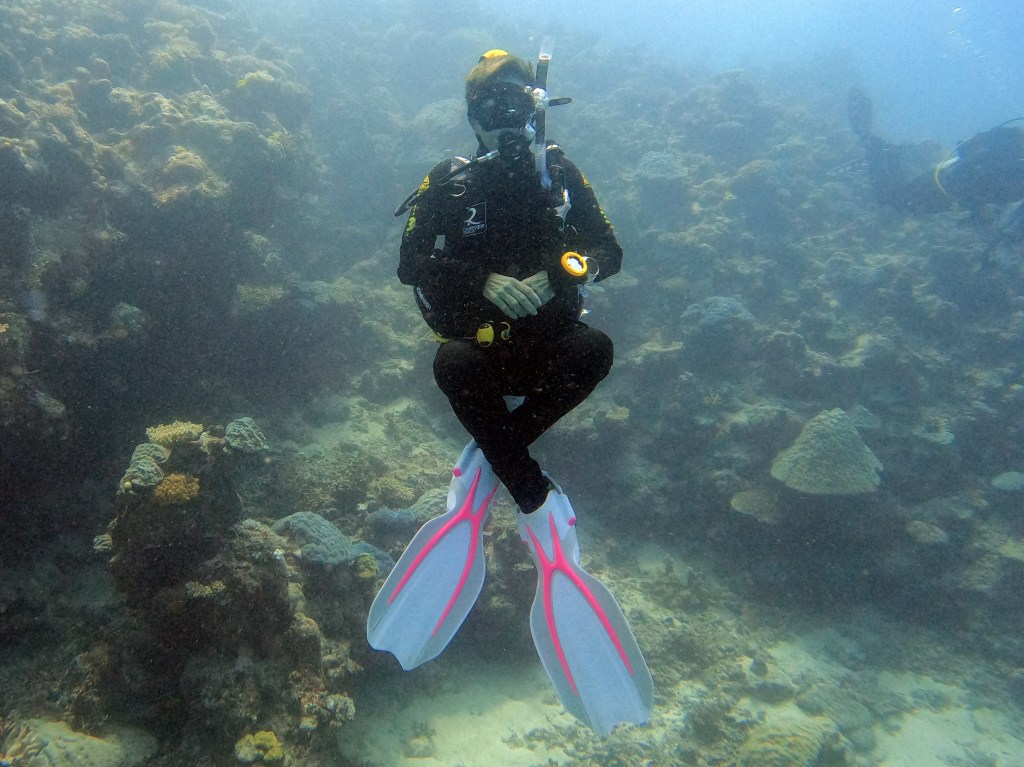
Simply put, buoyancy is the way an object immersed in water floats (in our case, scuba divers). There are three stages of buoyancy – positive, negative, and neutral. When we begin our dive, we are positively buoyant as we have inflated our BCDs (buoyancy compensator devices) and are floating on the surface. When we are ready to descend, we vent air from our BCDs and exhale, displacing a volume of water as we become negatively buoyant and sink. As we reach the correct depth for the dive, the density of the water creates pressure on us. Divers need to adjust to the force by adding short bursts of air into their BCD until they are neutrally buoyant, neither sinking nor floating, but rather hovering effortlessly in the water column. Obtaining neutral buoyancy when scuba diving is an important skill that allows Scuba Women to maintain a stable position at any depth without exerting unnecessary effort. So why is buoyancy important in scuba diving? Correct buoyancy enables the diver to control their dive.
Tips for Improving Buoyancy Control
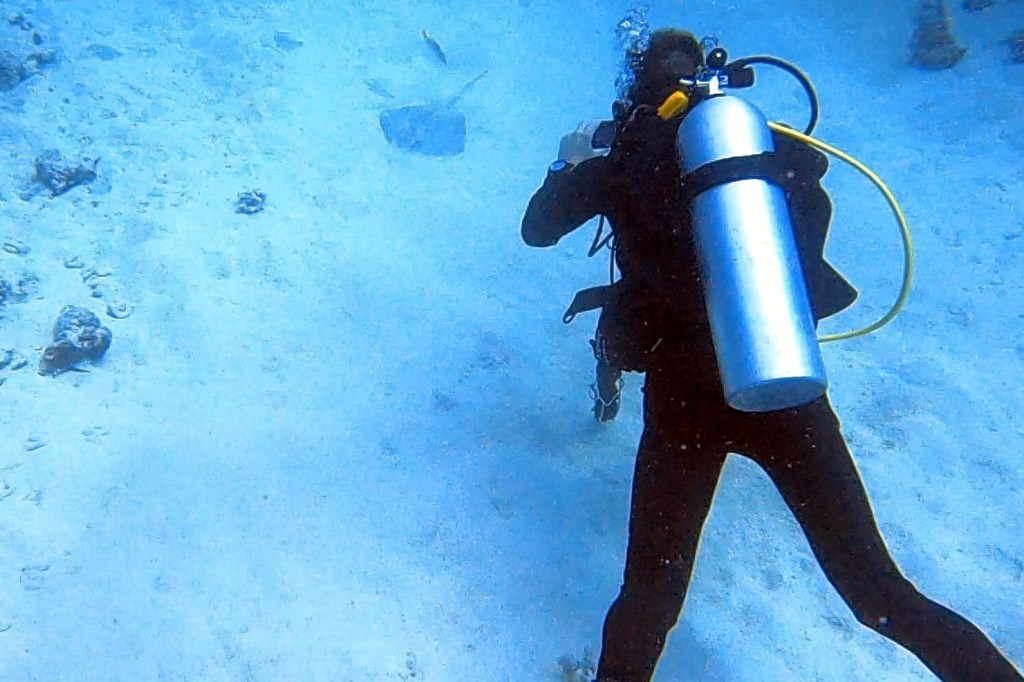
- Perfect Your Weighting: Start with proper weight distribution by conducting a buoyancy check at the surface. Adjust your weight system until you achieve near-neutral buoyancy when exhaling at eye level.
- Streamline Your Gear: Minimize drag by securing loose equipment and opting for streamlined dive gear. Ensure your hoses are tucked away and your fins are properly fitted to reduce resistance.
- Master Your Breathing: Practice slow, deep breaths to maintain a relaxed and consistent breathing pattern. Adjust your lung volume and buoyancy compensator (BCD) accordingly to control your ascent and descent.
- Fine-tune Your Trim: Achieve a horizontal body position, known as trim, by distributing your weight evenly and aligning your body with the water’s surface. Proper trim enhances stability and reduces air consumption.
- Utilize Proper Finning Techniques: Employ efficient fin kicks, such as the frog kick or flutter kick, to propel yourself smoothly through the water while minimizing disturbance to the environment.
- Adapt to Changing Conditions: Be mindful of how different water environments, currents, and depths influence your buoyancy. Make adjustments as necessary to maintain neutral buoyancy throughout the dive.
- Hold off on bringing the camera until you’ve mastered buoyancy control. While we all want stunning dive photos, ensuring your buoyancy is stable is paramount. Concentrating on photography too soon can easily throw off your buoyancy.
- Practice, Practice, Practice: Buoyancy control is a skill that improves with practice. Dedicate time to honing your buoyancy skills during training dives and refresher courses.
A Scuba Woman’s Battle with Buoyancy Control
Buoyancy has been a bit of a rollercoaster for me. While I strive to maintain control over it, there are dives where I feel like I’ve mastered it and others where it seems to drift away.
I have a genuine phobia of floating away, probably from the childhood trauma of being put into a swan float and then drifting off into the horizon. Even now, as a Senior Scuba Woman, I have had trouble releasing the past, and my fears have followed me into scuba diving. Here is a quick snapshot of my more memorable buoyancy issues.

Positive Buoyancy – Panic at 5 Metres
The most intense moment of panic I’ve ever experienced while scuba diving occurred during a shallow dive off a 5-meter jetty in frigid waters.
Clad in hired gear and a thick 7mm wetsuit, buoyancy control became a daunting challenge. Shallow dives are notorious for testing buoyancy skills, and this dive tested mine. As a Scuba Woman, I was heavily weighted to counteract the buoyancy of the thick wetsuit. Inflating my rented buoyancy compensator to achieve neutral buoyancy seemed like the logical solution, but I trapped air, causing me to struggle to stay submerged.
I felt the weight of panic setting in as I battled against the buoyancy issues. My attempts to descend were futile; instead, I felt myself being pulled upwards as if I were floating away. My bottom was in the air, the blood was rushing to my head, and I was getting dizzy. It was a dreadful feeling. Despite my frantic efforts, I couldn’t shake the feeling of losing control.

Thankfully, despite my panicked state, I was able to get to the surface safely. I cut the dive short and missed seeing a weedy sea dragon—the reason for the dive and the 2000km trip to the Mornington Peninsula. In hindsight, I should have hugged my BCD and used my dump valves to release the trapped air. I also added too much air to my BCD too quickly. When adding air, a quick short burst is all that is needed, and then give your buoyancy time to adjust. Why is buoyancy important in scuba diving? Correct buoyancy is important so you can see the weedy sea dragon!
Buoyancy Control – My Confidence is Floating Away
Getting back into the ocean as soon as possible to rebuild my confidence and improve my buoyancy, I was in a situation where I had to hire gear again. I was enjoying the dive, and then suddenly, I was positively buoyant. The alarming feeling of floating away saw me finish the dive. It was incredibly frustrating, especially considering I still had 120 bar left in my tank and a plethora of reefs to explore. I am sure it was trapped air again, but at the time, I couldn’t correct it. These two dives, one after another, unsettled me for a long time. Again, I should have used my dump valves to v if I couldn’t deflate my BCD my inflator hose. Why is buoyancy important in scuba diving? Buoyancy is important so divers can have longer dive times and see as much underwater as possible.
Buoyancy Woes: Navigating the Wreck Dive
I had planned a weekend diving trip to celebrate my birthday. I had also treated myself to all-new dive gear. It was the first time I was using integrated weights, and I underestimated the weight I would need with my new gear. I struggled to descend down the mooring line. The situation compounded when I lost a weight pocket. I was left lopsided and spinning around and unable to descend. It was exhausting and harrowing in tough conditions, so I had no choice but to end the dive. Why is buoyancy important in scuba diving? Correct buoyancy is important in scuba diving, so I never have to go through that experience again!
Buoyancy Blunders: Drifting Off and Being Rescued (Oops!)
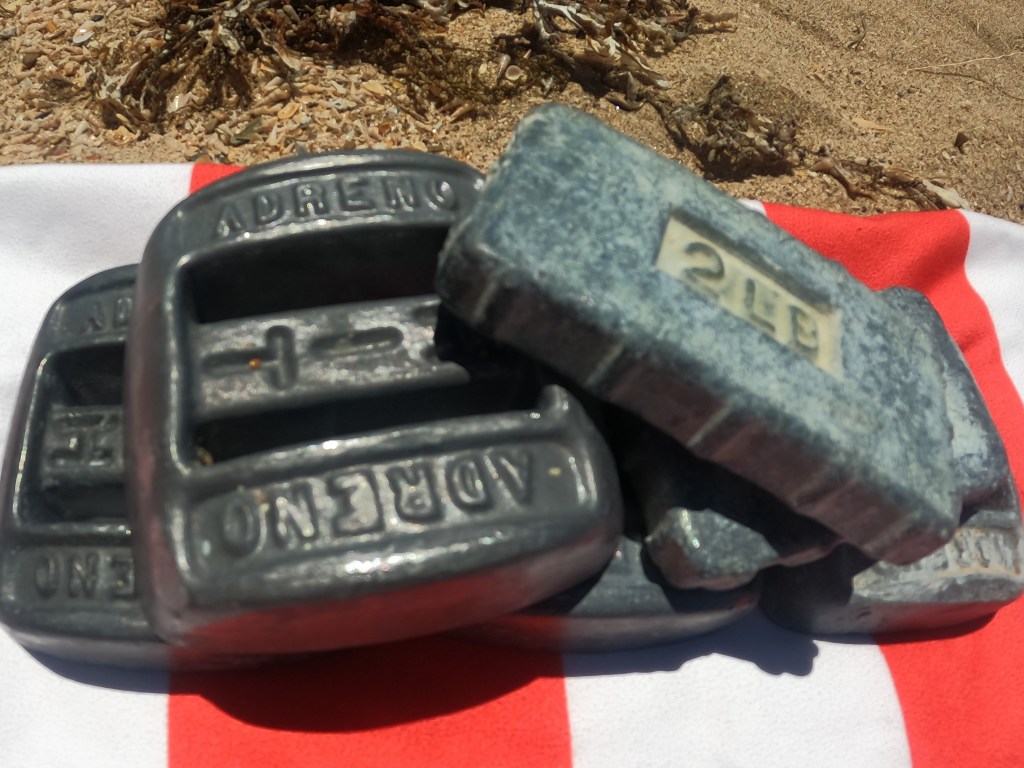
During a dive that called for a free descent, it became apparent that either I was underweighted or my descent wasn’t adequately controlled. Admittedly, I hadn’t conducted a buoyancy check beforehand. Struggling to descend, I found myself swept away by the current, veering off course from the intended dive site. It took the timely intervention of my son, Joshua, to come to my rescue. Adding an extra weight made all the difference as I effortlessly descended, the additional three pounds proving to be just what I needed. Why is buoyancy important in scuba diving? Buoyancy is important in scuba diving, so I never have to listen to Josh regale me with the tale of my rescue again!
By now, you would think I have learned my buoyancy lessons. But no, I insist on learning the hard way. During a liveaboard trip near Cairns, the warm water meant we were diving in stinger suits only. I underestimated my weight, didn’t do a buoyancy check, and spent the first dive with my bottom in the air, trying to stay down. Correctly weighted, the following dives were much more enjoyable.
Buoyancy Hindsight: Learning the Hard Way
As a nervous Scuba Woman, my fear of drifting away led me to overcompensate by loading up on too much weight. The result? Some dives felt like I was plummeting to the ocean floor like a stone, while my buoyancy compensator resembled a pufferfish inflated to the max. Despite these challenges, I eventually managed to achieve neutral buoyancy once underwater, regardless of how much air I needed to add. It became apparent that my struggles revolved around fine-tuning my weight distribution and mastering controlled ascents and descents.

Looking for guidance
I wanted to break the habit of diving heavy, but pre-dive nerves would get the better of me, and I would add an extra weight (or two). I talked about my buoyancy control issues extensively with anyone and everyone. It took me a while to find advice that really clicked for me. Typically, we’re issued weights in increments of three pounds each. So now, I’ve shifted my focus from counting the number of weights to thinking in terms of total pounds. So, rather than saying I’m diving with five weights, I recognize that I’m carrying a total of 15 pounds. To ease my anxiety, I’ve invested in some two-pound and one-pound weights, allowing me to gradually adjust my buoyancy, one pound at a time.

Surface Buoyancy check
It’s recommended that a buoyancy check be conducted prior to diving. (If only I would listen to my own advice🙄) One common method is the surface buoyancy check. Once you’re in the water, place the regulator in your mouth, take a breath, and hold it while deflating your BCD. Ideally, you should sink to eye level, indicating you are correctly weighted and neutrally buoyant.
However, I’ve found that this approach doesn’t quite work for me. For some reason, it tends to confuse me, and I end up breathing erratically, unsure of my position in the water or my buoyancy status.
Buoyancy check Tanya’s style
I let my buddy know before I deflate my BCD, keeping my regulator in my mouth, I exhale, effectively starting a controlled descent. If I begin to sink in a controlled manner, my buoyancy is ok. If I am having trouble, I ensure I haven’t got any trapped air by using my dump valve and hugging my BCD. Another little trick is to pull open the neck of your wetsuit, letting water in, which dispels any trapped air, though it can be a bit cold. If I am having trouble, I will get an extra weight. If I sink really quickly, I know I am too heavy.
After I have completed a controlled descent to the dive site, I prioritize achieving neutral buoyancy. When I am neutrally buoyant, I prefer not to tinker with my BCD, relying solely on my breath and lung volume to regulate my buoyancy. There’s a sense of satisfaction in exhaling and effortlessly sinking to get a closer look at something, then rising back up with each inhale.
Buoyancy Brilliance: Elevating Your Scuba Diving Experience
Mastering buoyancy control is essential for maximizing the enjoyment and safety of scuba diving. By understanding the principles of buoyancy and implementing practical techniques, you can elevate your diving experience while minimizing your impact on the underwater world. Embrace the challenge of perfecting your buoyancy skills and embark on unforgettable underwater adventures with confidence.
It’s Never Too Late to Become a Confident Scuba Woman – Take the Dive with Me,
Want to be part of our powerful community? Subscribe to receive the latest posts straight to your inbox and join other women confidently scuba diving.💧💧💧
If you liked this post or any other please feel free to share using the buttons below
 Empty Nest Diver
10 thoughts on “Scuba Diving Buoyancy Control Tips”