

Exploring the underwater world through scuba diving is an exhilarating adventure, but safety should always remain the top priority. One essential practice that ensures the well-being of every diver is the buddy check. Whether you’re a seasoned diver or just getting started, mastering the buddy check is an important part of a Scuba Woman’s pre-dive experience. Understanding the significance of this essential practice can be the difference between a dive filled with wonder and one fraught with danger. I’ll walk you through the significance of Buddy Checks and provide a step-by-step guide to completing a PADI Buddy Check utilizing the BWRAF acronym.
It’s Never Too Late to Become a Confident Scuba Woman – Take the Dive with Me, Tanya.
Pre-Dive Safety Check Before Your Buddy Check
Drama in the deep – no thank you – not for this Senior Scuba Diver. I prioritize safety above all else. The key to a drama-free dive lies in pre-dive checks, a responsibility shared between you and your dive buddy. It all begins on land as you set up your dive gear. Ensure your tank is filled to at least 200 bar or 3000 psi.
Breathe through your regulator and octopus, monitoring the air gauge for steady readings, and checking all hoses are securely connected are crucial steps. Any suspicion of a leak or worn O-ring warrants immediate attention. The saying is small bubbles, small troubles. I don’t like having any troubles, so I don’t like any bubbles.
I rely on my Cressi R1 BCD’s built-in handle to assess the tank strap’s security. A vigorous shake confirms its stability, providing me with peace of mind before venturing underwater.
Addressing issues on land can be the pivotal difference between a successful dive and a canceled one. And remember, if any doubts linger, never hesitate to ask. This isn’t a buddy check. This is you taking ownership of your dive safety as you set up your gear before you get on the boat. Let’s dive responsibly and ensure every underwater adventure is a smooth, safe journey.

When I learned to dive, my Buddy Checks were painstakingly slow. Now, they are second nature and completed in a few minutes. I still follow my open-water PADI training and use the acronym BWRAF. (Big Whales Rule All Fish) I am a lot faster now, and I have caught problems that may have turned into potent, which is why we perform Buddy Checks.
Diving into the Deep: Exploring the Importance of Buddy Checks
Embarking on an underwater adventure is an exhilarating experience, but it comes with its own set of challenges and risks. As Scuba Women, ensuring our safety and the safety of our fellow divers is paramount. That’s where Buddy Checks come into play.
What exactly are Buddy Checks? Buddy checks are pre-dive safety procedures conducted with your dive buddy. They aim to ensure that you and your partner are adequately prepared for the dive ahead. These checks not only enhance safety but also foster a sense of teamwork and camaraderie underwater.
So, why are Buddy Checks so crucial? Here are a few reasons:
- Buddy checks are the first line of defense against potential diving hazards. By thoroughly inspecting each other’s gear before descending into the depths, divers can identify and address any issues that may compromise safety underwater.
- Buddy Checks ensure both divers have all the necessary equipment for their dive and the air valve is open.
- In the unpredictable ocean environment, having a buddy by your side provides an extra layer of safety. If one diver encounters a problem, their buddy can provide assistance and support, helping to mitigate any potential dangers.
- Knowing that you and your buddy have thoroughly checked each other’s equipment before diving instills confidence and peace of mind. It allows divers to focus on enjoying the underwater world without worrying about equipment malfunctions.
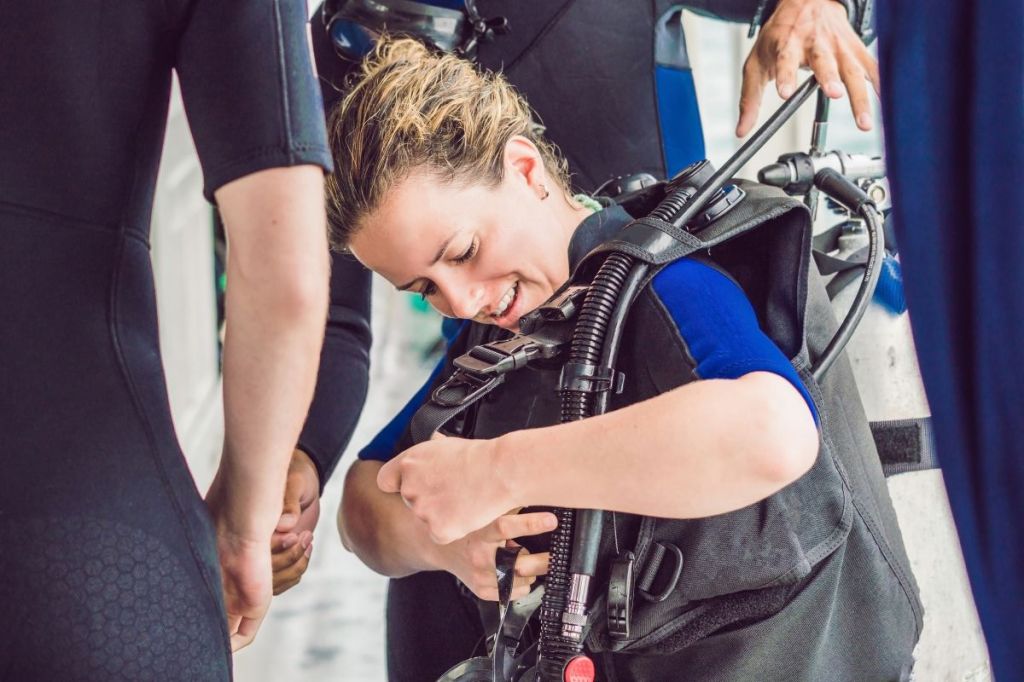
Now, let’s talk about how to conduct a buddy check effectively. One widely used method is the PADI Buddy Check, which utilizes the acronym BWRAF:
- B—Buoyancy: Check that each diver’s buoyancy control device (BCD) is properly inflated and deflated. Be familiar with your buddy’s low-pressure inflator hose and its buttons. Confident everything is working? Inflate your BCD so you’re ready to enter the water.
- W—Weights: Ensure that weight belts or integrated weight systems are securely fastened and properly distributed, with the end of the belt tucked away. Remember the right-hand release for weight belts in an emergency. Listen for the click to know if the weight pockets are secure. It is an expensive lesson to learn if you lose a weight pocket— trust me, I know!
- R – Releases: Verify that all buckles, straps, and quick-release mechanisms are in good working condition.
- A – Air: Confirm that each diver’s air supply is turned on and that regulators function correctly. Do a few breaths and watch your gauge as you breathe; the needle must stay steady. As per DAN’s guidelines, your cylinder valve should be fully open. It can be confusing as many divers do a quarter-turn back. Originally designed to protect valves from leaking, it is no longer necessary with improved valve design. Scuba diving’s best practice is to leave your cylinder valve fully open to prevent diving accidents. I have included a link to an article by Chloe Strauss from DAN. (Divers Alert Network) See Old Habits Die Hard
- F—Final Check: Have you defogged your mask? Are you comfortable? Is the tank too high or low? Does anything feel lopsided? Is your mask on? Are your fins on? Before descending, give each other a final OK signal to indicate readiness for the dive.
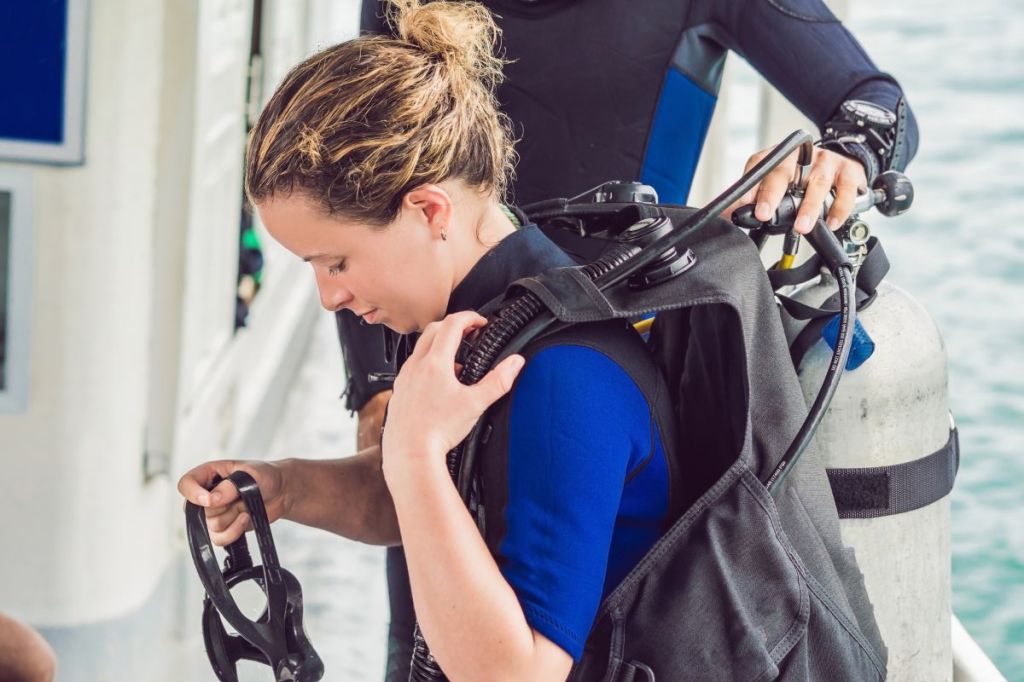
In addition to equipment checks, buddy checks also involve discussing dive plans, signals, and emergency procedures with your partner. Communication is key to a safe and enjoyable dive. I always appreciate help from my buddy when I have to get in or out of my wetsuit or manage heavy gear.
Know the dive plan and discuss it with your buddy, be familiar with your equipment, and know your buddy’s gear. It never hurts to review hand signals, especially if you are diving with a new buddy. Before entering the water, a good dive company will do a final check – if they don’t ask them to. I also get my buddy to check my mask for any hair that may be caught.
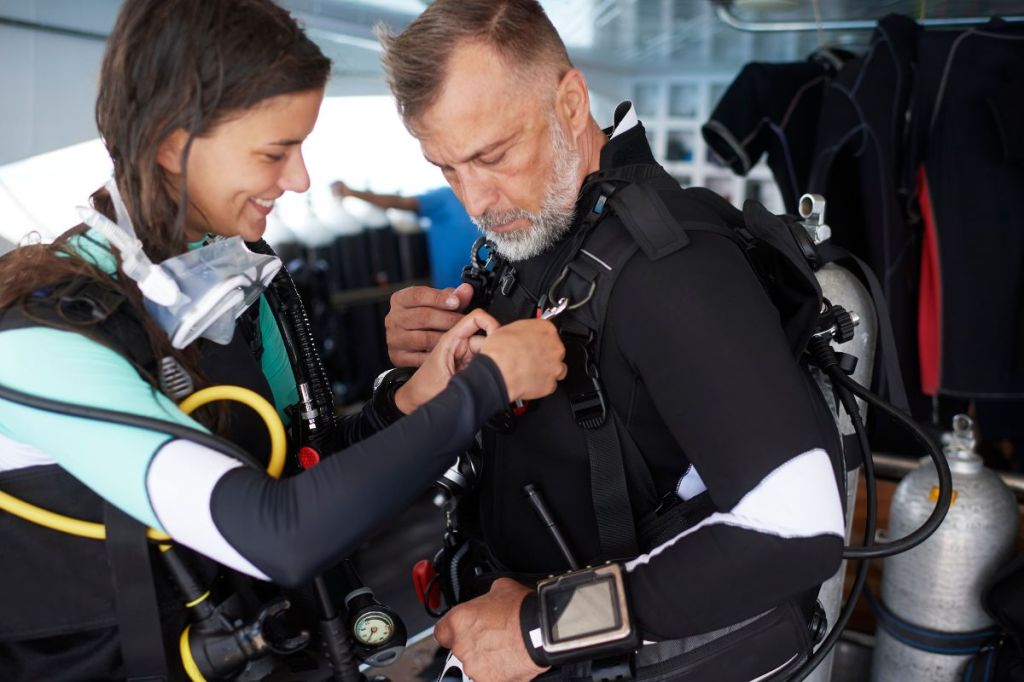
Remember BWRAF
- Begin With Review And Friend
- Being Wary Reduces All Failures
- Big White Rabbits Are Fluffy
- Big Whales Rule All Fish
Always wait for the all-clear before entering the water. Another diver may be under you, and nobody wants a diving accident. Once in the water, signal that you are okay by placing your hand on your head or waving your arms if you are not okay.
By performing Buddy Checks, divers ensure both their dive gear and their buddy’s dive gear are in good working order. The benefits are multiple. A Buddy Check helps prevent dangerous situations underwater. A pre-dive check can also relieve anxiety, as you are confident your equipment is in good working order. Air being turned on allows you to breathe underwater!!
Buddy Check Diving
I am a lucky Scuba Woman surrounded by a fantastic network of dive buddies, including my son, sister, and others I’ve connected with through our shared love of diving. We have become great friends, and we often travel to dive destinations together. Motivation to dive is never in short supply, particularly when the weather favors us.
Residing along the breathtaking Capricorn Coast, we’re blessed with weeks of idyllic weather tailor-made for diving adventures. Each day brings new variations in our buddy teams as we venture into the depths together.

A good buddy has your back, and you have theirs. It is surprising how well buddies can communicate underwater. My sister and I are on the same wavelength, and we can have conversations. My son and I have a few communication problems, but I suspect it’s intentional on his behalf. Agreeing before the dive, he’ll be on my top left; he spends the whole time bottom right.
Scuba Diving Etiquette for Buddies
It is a big, beautiful ocean. Give yourself some space while still being aware of your buddy. Scuba divers need to stay close enough to their buddies to deal with an emergency without being on top of each other. Be a good buddy; don’t go swimming off doing your own thing. Frustratingly, I have spent whole dives chasing after buddies, which has been greatly detrimental to the enjoyment of my dive.
If catching your buddy’s attention underwater proves challenging, ensure to address the issue post-dive. Don’t wait until something happens and it’s too late. You owe it to each other. Remember, ultimate responsibility lies with yourself: consistently monitor your dive computer and stay within your limits.

Diving is a buddy sport, and a good buddy keeps you safe and shares your adventures underwater. Keep those relationships strong, non-diving friends are not interested in your GoPro footage, or the cute little Mantis shrimp you saw. Your dive buddy will share your delight with all things scuba. A good diving buddy enhances your dive as you feel safe, knowing they will be there if anything goes wrong. The best dive buddies find really cool things underwater and help you improve and enjoy your dive.
As a community of divers, let’s prioritize safety and teamwork by incorporating buddy checks into our diving routines. Remember, diving is an adventure best enjoyed with a buddy by your side. So, before you take the plunge, don’t forget to buddy up and check in with each other. Happy diving!
It’s Never Too Late to Become a Confident Scuba Woman – Take the Dive with Me, Tanya.
Want to be part of our powerful community? Subscribe to receive the latest posts straight to your inbox and join other women scuba diving with confidence 🤿🤿🤿
[Affiliate Disclosure: This page has affiliate links. If you so choose to follow one of these links and make a purchase, I will earn a small commission paid to me by the company, and at no expense to you. The commission I make from affiliate sales helps me run this blog and provide regular, quality value to you. So, thank you for your support!]
If you liked this post or any other please feel free to share using the buttons below
 Empty Nest Diver
3 thoughts on “Scuba Diving Buddy Checks”