
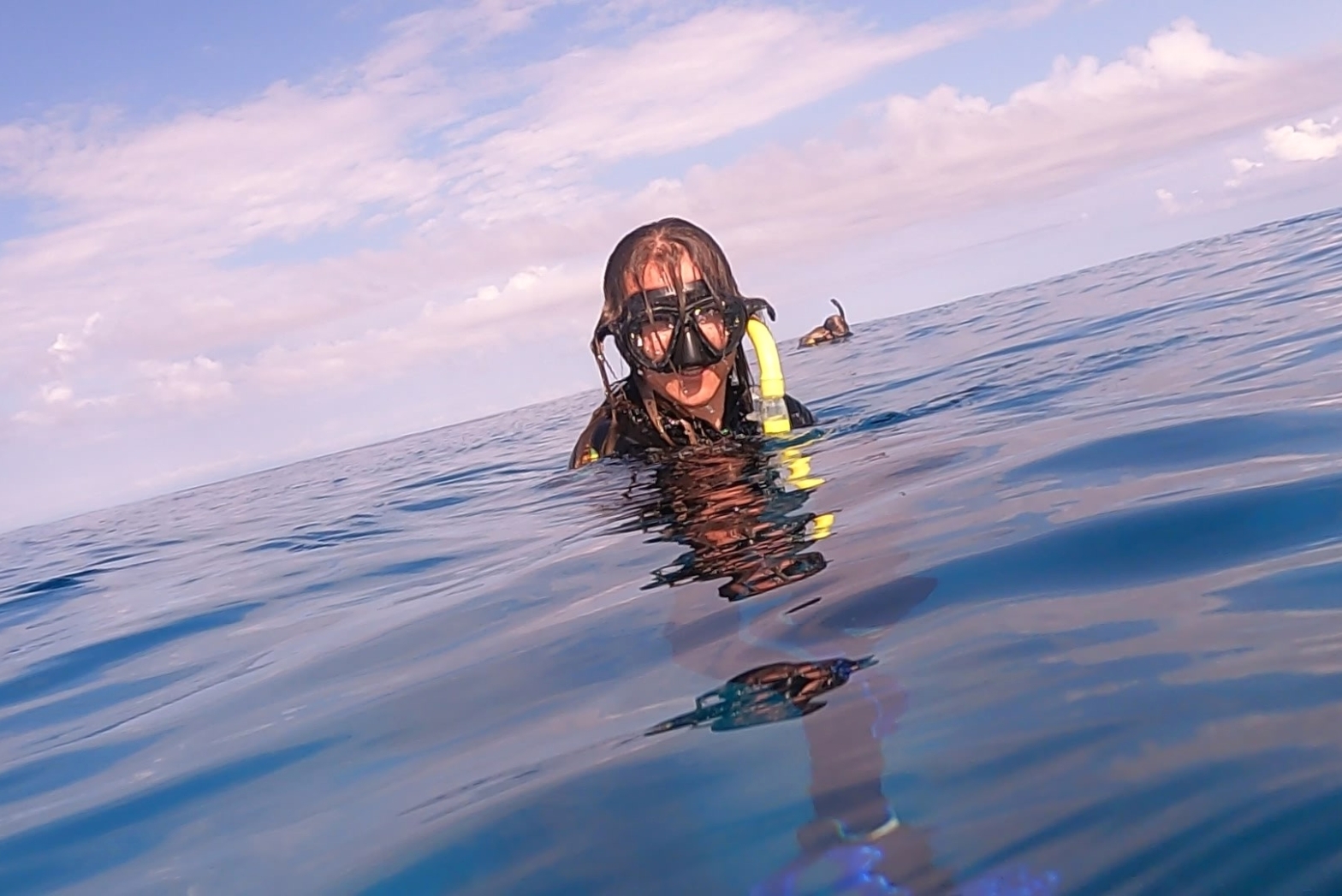
Are you feeling more like a Medusa than a Mermaid in the water? Managing your hair while scuba diving can be a challenge. What to do with your hair when scuba diving? I’ll be sharing some valuable tips and tricks to keep your hair under control while exploring the ocean depths. Disheveled dive hair is something most Scuba Women experience. A tangled mess floating before your eyes, scuba diving with long hair can be a knotty problem. Fortunately, with the right techniques and accessories, you can maintain that Mermaid vibe throughout your underwater adventures. If you’ve ever experienced the frustration of dive hair, you’re not alone. Together, let’s dive into some solutions to keep your mane looking magnificent beneath the waves.
As a Scuba Woman, I’ve found my solution to diving hair is simply to keep it short. Now, as a Senior Scuba Diver, my focus shifts more towards embracing my grey hair than fretting over the post-dive tangles. I wear my tousled post-dive hair with pride—it’s a badge of a fulfilling day spent underwater. Scuba diving with longer hair than mine can indeed be a challenge, with strands wrapping around equipment and floating like peculiar sea creatures in the water. No Scuba Woman wants to spend hours after a dive trying to comb out knotted tangles. Fortunately, I have some scuba diving hair protection tips, tricks, and accessories to help combat dive hair and keep you looking like a Mermaid.
It’s Never Too Late to Become a Confident Scuba Woman – Take the Dive with Me, Tanya.
Tips for Dealing with Long Hair on a Dive
I dedicate this post to Natalie, my sister and dive buddy. Natalie has long, fine, layered hair and often emerges from a dive looking more like a Medusa than a mermaid. Natalie, little sis, these dive hair care tips are for you!

How to Avoid Hair-Related Issues when Scuba Diving
Dive hair, that unruly tangle of strands post-dive, is often a result of multiple factors encountered during our underwater sojourns. The primary culprit is the salt content of seawater, which strips moisture from the hair, leaving it dry, brittle, and prone to tangling. Additionally, the constant movement and friction of hair against mask straps and equipment contribute to the disheveled appearance. For those with longer hair, the drag and pressure of water further exacerbate the situation, leading to a mess of knots and tangles. Despite our best efforts, dive hair seems inevitable, but with the right care and precautions, its impact can be minimized, ensuring a smoother post-dive grooming experience.
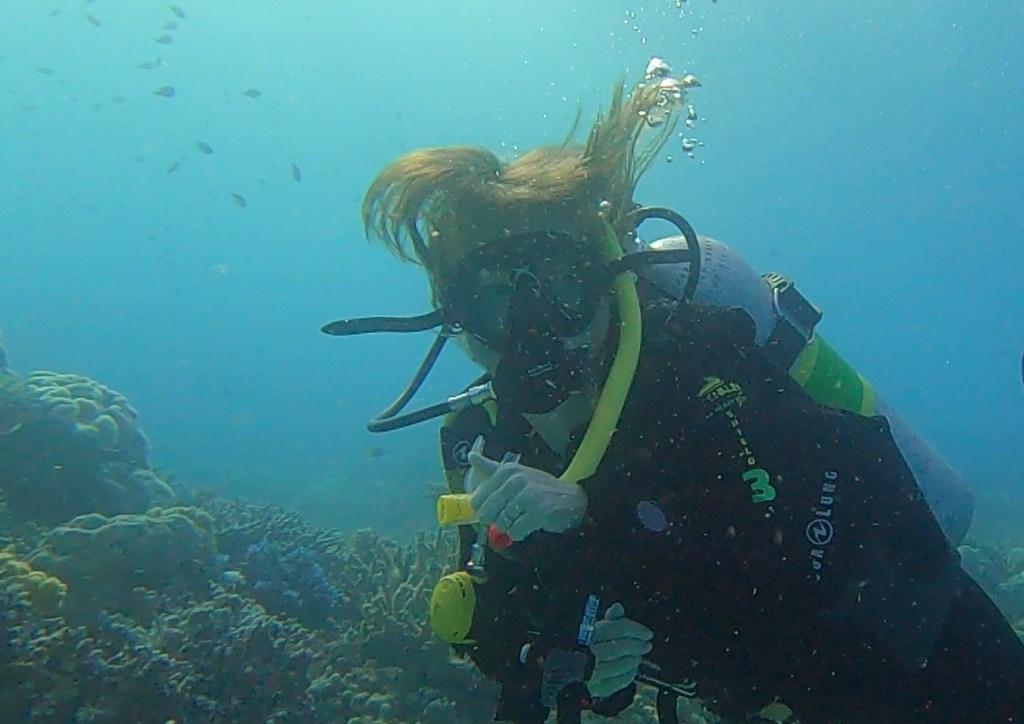
What to Do With Your Hair When Scuba Diving?
Read on for more simple tips to prevent dive hair – Natalie, this means you.
Just as your skin craves hydration, your hair requires moisture, too. The salt present in ocean water can rapidly deplete this moisture, leaving your locks parched and fragile. Acknowledging the porous nature of hair, it’s beneficial to saturate your hair with fresh water before diving. This pre-dive drenching reduces the absorption of salt, helping to maintain your hair’s natural hydration levels.
Before diving, comb your hair, wet it with fresh water, and apply a reef-safe conditioner to help prevent tangles and protect hair follicles. We want our locks to be lovely, healthy, and tangle-free without damaging our delicate reefs. My personal favorite is a leave-in conditioner by Stream2Sea. Stream2Sea has a great range of marine-friendly products that have been tested and proven reef-safe.
Stream2Sea is a fully rounded, environmentally conscious company with fabulous marine-friendly skin care products.

Coconut oil may work better for thicker, longer hair. Organic coconut oil is biodegradable but doesn’t work for all hair types, so maybe test first. It is water-repellent and acts as an excellent barrier to salt. I use coconut oil as a hair mask for a post-dive treat, making my hair soft and manageable.
Use a little spray bottle to reapply products between dives to keep hair protected and tangle-free. Alternatively, simply squeeze conditioner into the palm of your hand and apply it to the hair.
Mask-Friendly Hairstyles: Keeping Dive Hair Tamed Underwater
Once we have hydrated our hair, we need to address its movement. We can do this in two ways: with our choice of hairstyle or hair accessories.
Dive Hair – Banded Ponytails
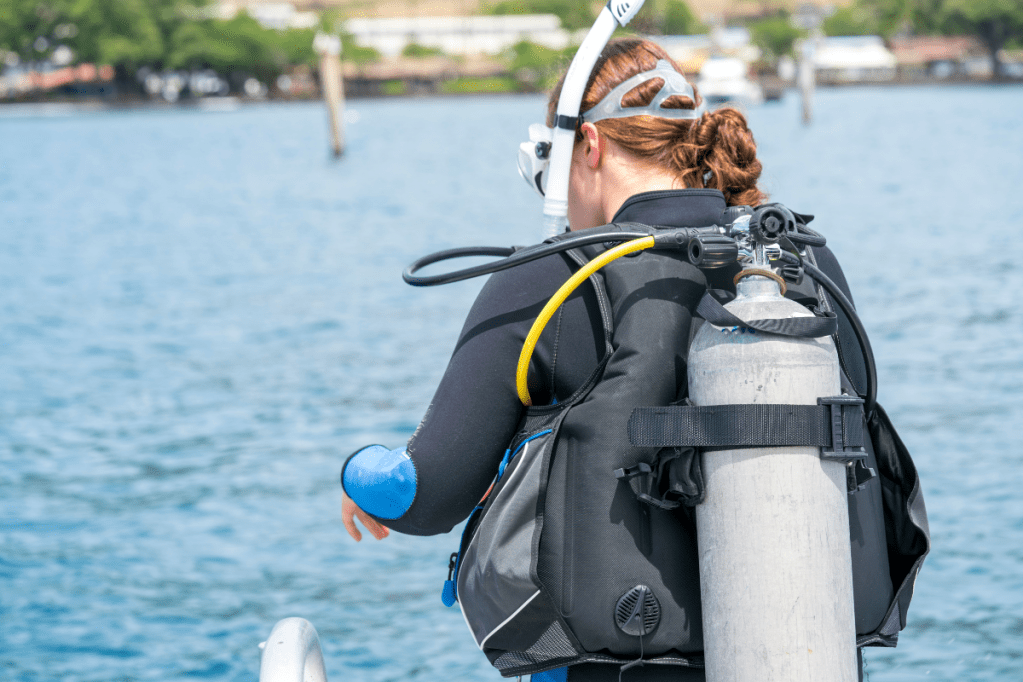
A banded ponytail is a simple and effective way of preventing dive hair. Easy to do, it will help prevent hair breakage. Create either a high or low ponytail, leaving room for your mask strap. Secure the ponytail every few centimeters with non-elastic ponytail holders.

Kooshoo presents the ultimate solution for maintaining control over your hair while championing environmental advocacy. Offering plastic-free hair ties, scrunchies, and headbands, Kooshoo ensures style without compromising on sustainability. Their motto, “Look Good. Feel Good. Do Good,” encapsulates their commitment to positive change.
Dive Hair – Braid
More than just a simple plait, a braid is a versatile hairstyle that begins at the crown of your head, effectively securing your hair in place. For women divers with layered or thick, long hair, interweaving hair into a French braid proves to be a great choice. This style not only keeps hair neatly tucked away but also firmly in place throughout your dive. To ensure optimal results, it’s essential to prep your hair properly beforehand. Start by treating your hair with fresh water, followed by conditioning it with a reef-safe conditioner such as Stream2Sea. Then, proceed to braid your hair while it’s still damp. This method not only helps to maintain your hair’s hydration but also ensures that your dive hair remains manageable and hassle-free all day long.
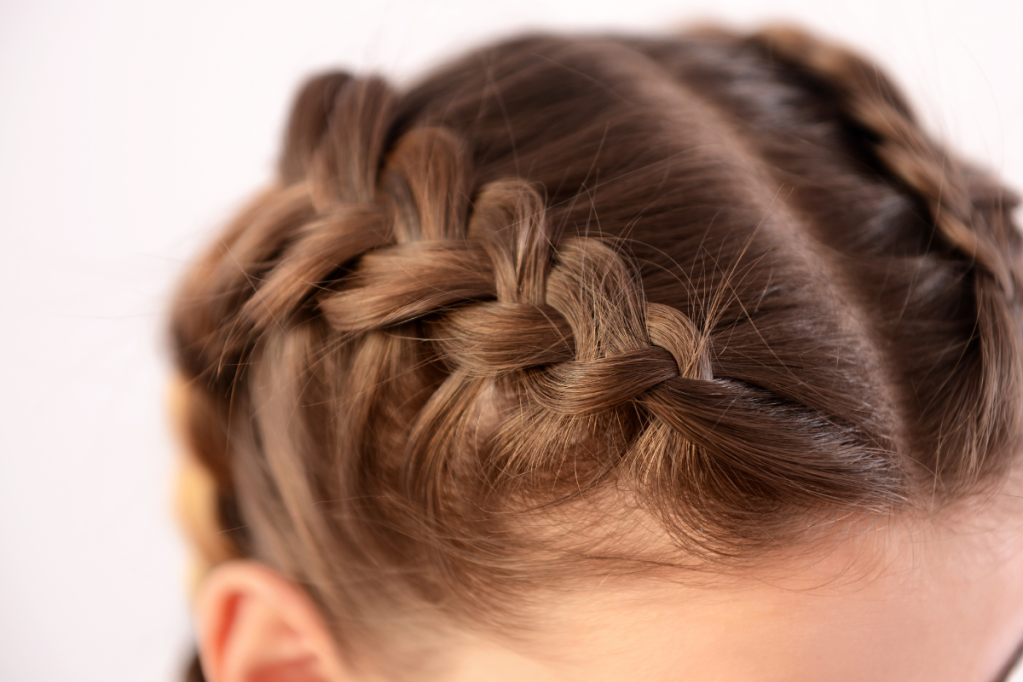

To avoid hair breakage and snares, leave the braid in until you can rinse the hair with fresh water and condition it. A good tip is to spray the conditioner into the braid as you undo it, working upwards.
Dive Hair Pig Tails and Plaits
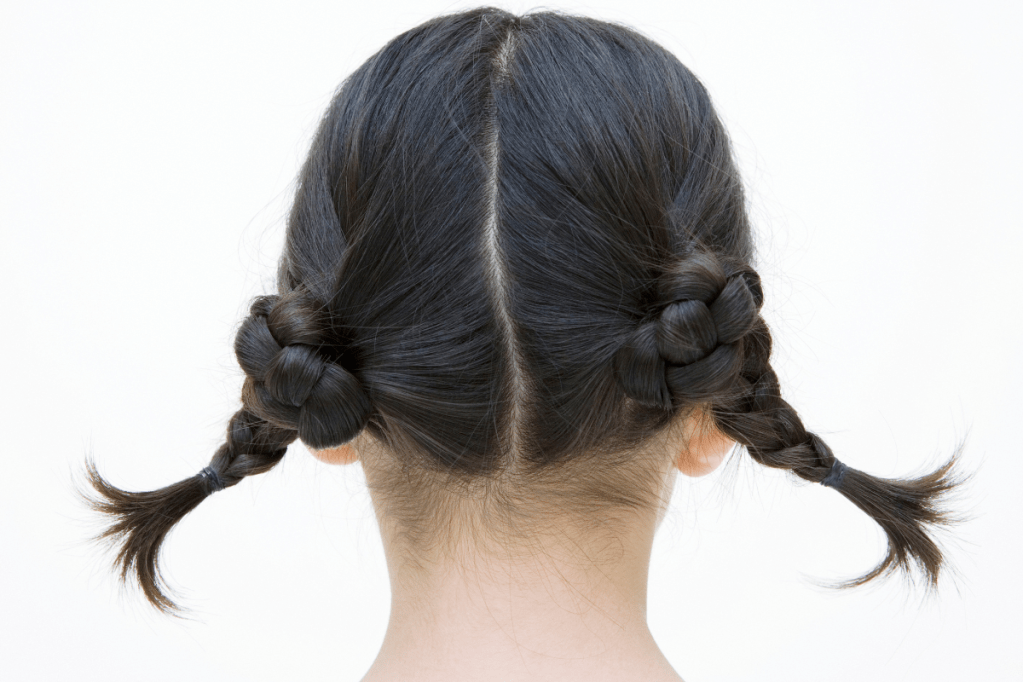
Pigtails or plaits – are a simpler version of a braid; let’s face it, not everyone can manage a French braid. Do a soft part, zig-zagged, or pull hair back to prevent a sunburnt scalp and begin the plait at either side of the nape of your neck. Pigtails keep hair secure but don’t tangle as much as a French braid as they are undone. Treat a pigtail the same as a banded ponytail and add an extra band every few centimeters.
A ponytail can also be tied into a high bun. Braiding your ponytail will lessen movement even more. Make two ponytails to help hold your mask strap in place. Start the first ponytail at your crown and the second about 10cm lower – the perfect strap holder. Keep the ponytail tight; a loose ponytail moves around during a dive, causing your mask strap to slip and your hair to knot. Remember to start with damp, conditioned hair.
Dive Hair Solutions: Essential Accessories for Taming Tangles
Mask Strap Cover
Our mask straps, crafted from adhesive silicone, often snag on our hair. As a Senior Scuba Woman, I have lost my share of hair when removing my mask. Investing in an affordable mask strap cover can be a game-changer. I adopted this essential piece of dive gear early on, and my hair thanks me for it. A neoprene mask strap cover slides across the silicone back strap of the mask. Instead of sticking to your hair, the mask strap simply slides on and off, eliminating hair-snagging woes.
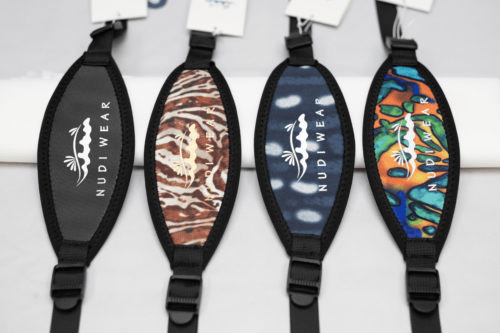
Many dive shops will have their logo on a mask strap cover—a nice souvenir of your favorite dive site or company. Mask strap covers are inexpensive and make a massive difference to the health of your dive hair. Nudi Wear makes beautiful mask straps with marine designs.
Dive hair – Bandana
Many of my dive buddies opt for buffs or bandanas, and for good reason—they serve a dual purpose. Not only are they simple to don and remove, effortlessly keeping hair secured and out of the eyes, but buffs also prevent those pesky fine hairs from escaping and getting caught in the mask frame. Additionally, they provide sun protection while on the boat; simply pull the bandana down to cover your head, neck, and face. Pairing a bandana with any of the hairstyles mentioned above is a surefire way to keep your hair neatly in place and fend off dive hair.
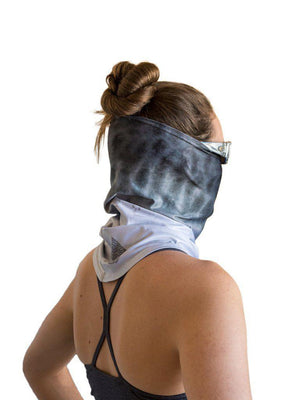
Waterlust is a great small company that makes sun-safe hair masks and bandanas from recycled plastics. Easy to put on and take off, the nature-inspired prints keep hair in place and out of your eyes. The bandanas also offer sun protection on the boat, as you can bring them down to cover your head, neck, and face.
Waterlust also makes scrunchies from fabric leftover from their leggings. A fashionable, responsible way to keep dive hair tied back.
Headbands
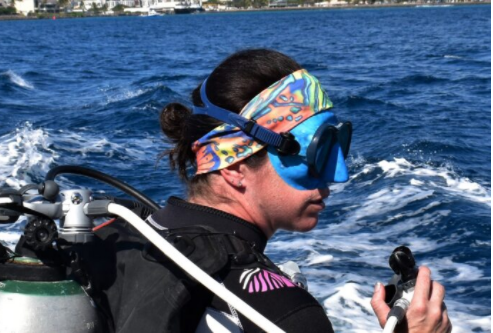
Headbands are perfect for keeping hair back off your face and out of your eyes. A headband is an excellent solution for fringes or hiding my grey hair. Headbands can also be a good form of sun protection, as they are comfortable to wear in and out of the water.
Nudi Wear sells a selection of headbands made from recycled plastic bottles. Four cool designs based on marine animals are available, along with matching mask straps and apparel. This small company is doing great work for our marine environment, recycling plastics and donating 10% of its profits to ocean conservation.
Dive hair – hood
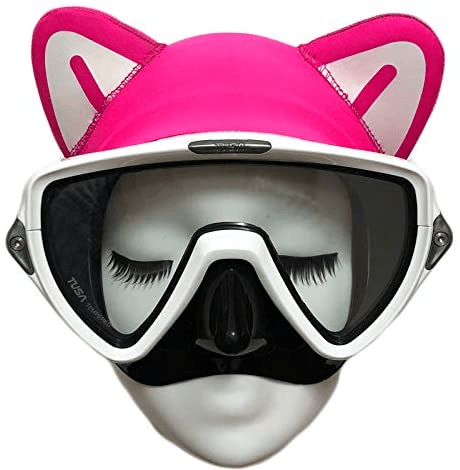
A hood is a good option for preventing hair breakage and protecting hair from the ocean. It also keeps you warm if you are diving in a cooler climate. We were on a liveaboard recently and admired a couple of girls who were wearing cute little cat hoods. Have some fun with these adorable hoods, which are made of thin neoprene for warmer climates.
Post Dive Hair Care Tips
After your dive adventure, taking care of your hair is crucial to maintaining its health and vitality. Start by rinsing your hair thoroughly with fresh water to remove any saltwater residue, then wash with a gentle, hydrating shampoo to replenish lost moisture. Follow up with a moisturizing conditioner, focusing on the ends to restore hydration and softness. Use a wide-tooth comb or detangling brush to gently remove knots and tangles, minimizing breakage. Avoid heat-styling tools and opt for air drying to prevent further damage. Treat your hair to a deep conditioning treatment weekly to nourish and repair any saltwater-induced damage. Don’t forget to protect your hair from the sun with a hat or UV-protectant leave-in conditioner, especially if you’ll be spending time outdoors after your dive. With these post-dive hair care tips, you can keep your locks healthy and looking their best, ready for your next underwater adventure.
Follow these scuba diving hair care tips for dive hair and go from Medusa to Mermaid in no time. If you have any great hair care tips for women scuba diving, please leave them in the comments below.
It’s Never Too Late to Become a Confident Scuba Woman – Take the Dive with Me, Tanya.
Want to be part of our powerful community? Subscribe to receive the latest posts straight to your inbox and join other women scuba diving with confidence 🧜♀️🧜♀️🧜♀️
If you liked this post or any other, please feel free to share using the buttons below
 Empty Nest Diver
This is such a thoughtful title! For women with long wavy hair, managing dive hair can be a real challenge. Tips that focus on protecting those beautiful waves from saltwater damage and tangling are a must. Using braids or a protective bun is perfect for maintaining long wavy hair while diving, and post-dive care with hydrating products ensures the waves stay soft and defined. Looking forward to these easy and practical hair care tips!
LikeLike