
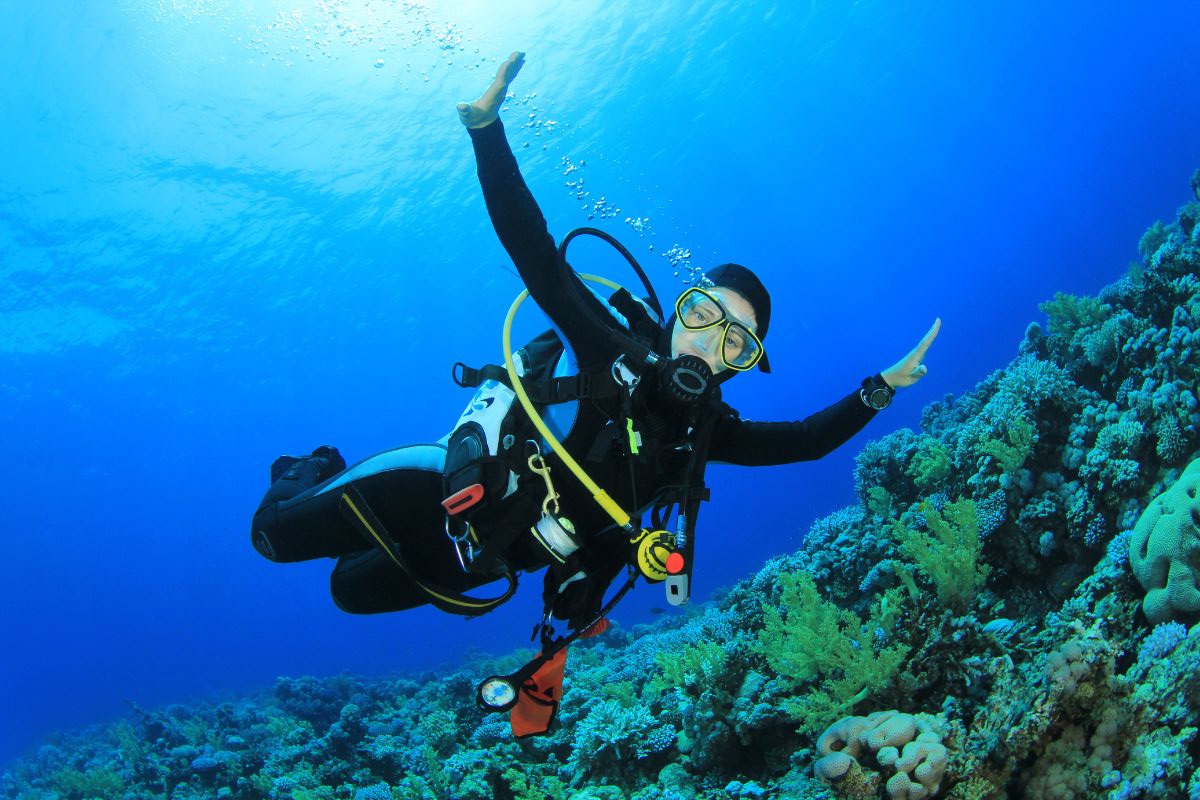
Buoyancy in scuba diving is one of the more challenging diving skills to learn, but it is vitally important as it impacts the dive, the scuba diver, and the surrounding environment. Dive gear, weights, breath, finning style, trim, ocean, river, or lake all affect buoyancy.
With an understanding of buoyancy, Scuba Women can better manage their dive, expend less energy, and conserve air. Improved buoyancy means longer bottom times and provides buoyancy control, protecting delicate corals and marine life. Neutrally buoyant scuba divers experience weightlessness as they effortlessly become one with the exotic underwater world they are exploring.
My 8 tips for buoyancy control will have Women Scuba Diving Confidently in no time.
It’s Never Too Late to Become a Confident Scuba Woman – Take the Dive with Me, Tanya.
Table of Contents
- Tip 1 for Better Buoyancy Control – Be Correctly Weighted
- Tip 2 for Better Buoyancy Control – Use Your Breath and Lung Volume
- Tip 3 for Better Buoyancy Control – Maintain Proper Trim
- Tip 4 for Better Buoyancy Control – Become Neutrally Buoyant at Depth
- Tip 5 for Better Buoyancy Control – Leave the Camera Behind
- Tip 6 for Better Buoyancy Control – Practice Different Finning Techniques
- Tip 7 for Better Buoyancy Control – Check your weight on the Safety Stop
- Tip 8 for Better Buoyancy Control – PADI Peak Performance Buoyancy
Tip 1 for Better Buoyancy Control – Be Correctly Weighted
Complete a buoyancy check on entering the water and establish neutral buoyancy at depth.
As a Senior Scuba Diver, I always perform a buoyancy check once in the water. For a surface buoyancy check, put the regulator in your mouth, inhale and hold your breath while deflating your BCD. Sinking to eye level means a diver is correctly weighted and neutrally buoyant. Sinking past eye level means a diver is too heavily weighted, and if the diver does not sink, they are positively buoyant and will require extra weight.

I find it easier to simply exhale and deflate my BCD, and if I begin to slowly sink in a controlled manner, I know my buoyancy is ok. If I am having issues sinking, I check for any trapped air by using my kidney dump valve, hugging my BCD, and pulling the neck of my wetsuit open to dispel any air pockets. If I am still struggling to descend, I will add another weight. I have bought some 1lb and 2lb weights and often use them to tweak my diving weight and perfect my buoyancy. If I sink really quickly, I remove some weight. Always let your buddy know you are performing a weight check.
It is important not to dive too heavily – something I have often been guilty of. It is a bad habit to get into and one I have almost broken. I have learned buoyancy is about balance. I hate being positively buoyant on the safety stop, so I begin a dive slightly heavier than I need to be. However, by the end of the dive, I can complete the safety stop when my tank is half empty and not be positively buoyant.

Weights are heavy, especially when gearing up. As a Female Scuba Diver and a Senior Scuba Diver, I struggle if I am carrying too much weight. Diving with too much lead can cause a rapid descent, putting both diver and the marine environment at risk. To counteract the extra weight, more air is required in your BCD, creating greater resistance in the water, which can lead to fatigue and faster air consumption.
Our tanks become emptier and lighter towards the end of a dive. If you become positively buoyant on the safety stop with an empty tank, add a little extra weight on your next dive. Generally, if you are comfortable on the safety stop, you are a correctly weighted Scuba Woman.
So….how much Weight does a Senior Scuba Diver need?
Many factors come into play when calculating how much weight to wear for your dive. Your body type, the thickness of your exposure suit, hoods, booties, steel or aluminum tank, and whether you are diving in fresh or salt water. To a degree, it is trial and error, but there is a formula you may apply that will get Scuba Women close to their correct weight. Calculate 10% of your body weight and tweak from there. I weigh 55kg (121 lbs), so I should dive with 12 lbs of weight, which I do in a short wetsuit, but I dive with 15 lbs in a thicker wetsuit.
Tip 2 for Better Buoyancy Control – Use Your Breath and Lung Volume
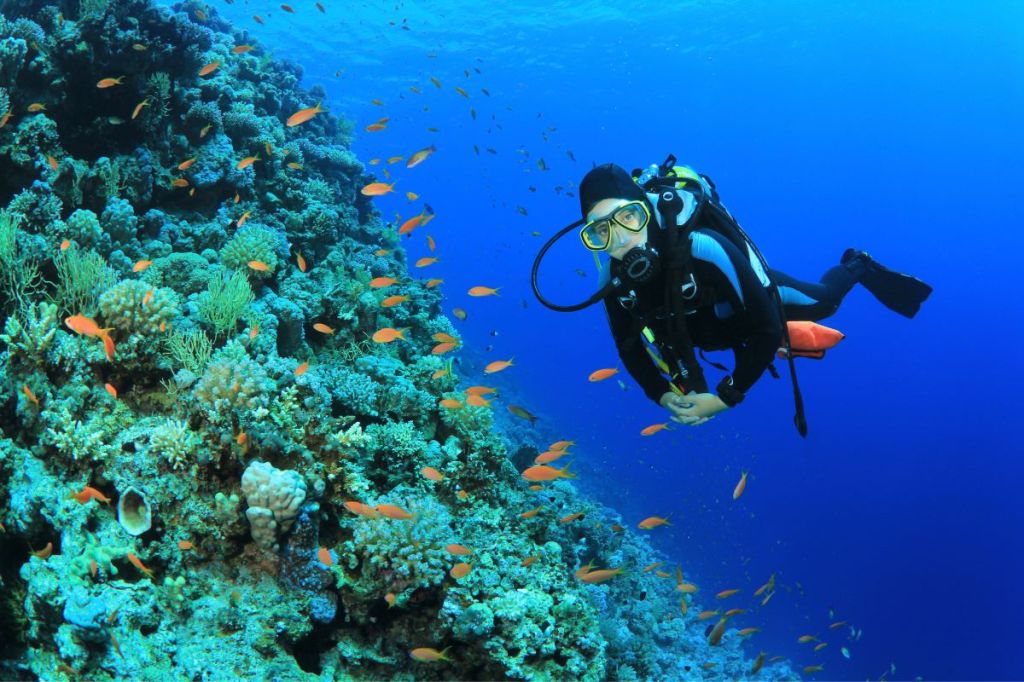
Neutral buoyancy enables scuba divers to control buoyancy through lung volume and breath control. Large inhalations increase lung volume, and divers rise in the water column. Large exhalations have the opposite effect; scuba divers sink in the water column. Breathing normally and steadily will keep a Scuba Woman in the water column without moving up and down. Scuba divers must never over-expand their lungs or hold their breath, as serious injury may occur.
Tip 3 for Better Buoyancy Control – Maintain Proper Trim
Like buoyancy, trim can be positive, neutral, or negative. Ideally, for most of your dive, your trim will be neutral – your body parallel to the bottom in a horizontal position. A Scuba Woman with neutral trim should move forward effortlessly without changing depth.
A Scuba Woman with positive trim (head higher than feet) will move upward when kicking. Negative trim (head lower than your feet) a diver will move downwards with each fin kick. Try hovering to practice maintaining a neutral trim and adjust your weights accordingly. Correct trim compliments buoyancy and helps conserve both energy and air.
Tip 4 for Better Buoyancy Control – Become Neutrally Buoyant at Depth
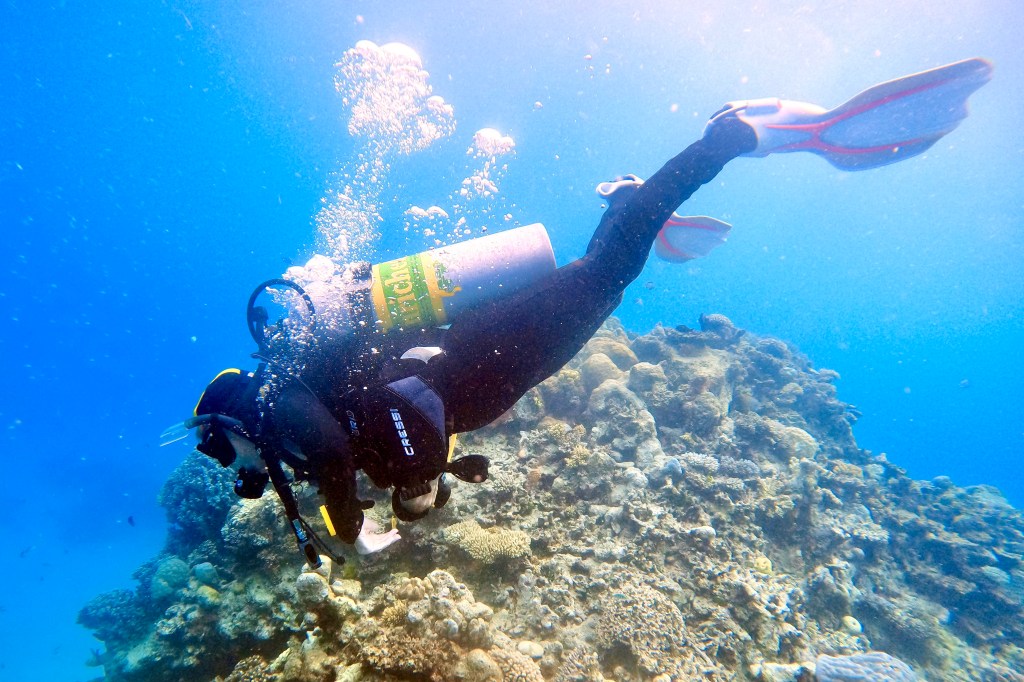
Once reaching the correct depth for the dive, take a moment to complete a check and get comfortable. As scuba divers descend and go deeper, water pressure tends to make divers negatively buoyant. This can be corrected by adding air to your BCD in quick short bursts. Always wait, giving it a moment to regulate. Take your time and adjust the air volume in your BCD until you achieve neutral buoyancy and can hover.
When you are comfortable and neutrally buoyant, begin your underwater odyssey.
Tip 5 for Better Buoyancy Control – Leave the Camera Behind
We are all keen for great photos of our dives. Female scuba divers must be comfortable with their buoyancy before taking a camera. Concentrating on taking a picture can quickly result in lost buoyancy and damage the object you are admiring. Be in the moment and enjoy the dive and the sense of accomplishment as you perfect your dive skills.

Tip 6 for Better Buoyancy Control – Practice Different Finning Techniques
A diver’s scuba fins and finning style will affect their buoyancy. The flutter kick (similar to a freestyle kick) is a standard finning style suitable for strong currents or if extra propulsion is needed. With the flutter kick, trim is important as it propels the diver in the direction they are facing – horizontally, upwards, or downwards.
The frog kick is more like a breaststroke kick and is ideal for better buoyancy. The frog kick requires less energy, thus conserving air and allowing the diver to be more balanced and maintain neutral trim.
Tip 7 for Better Buoyancy Control – Check your weight on the Safety Stop
The safety stop can be an issue as divers tanks become lighter toward the end of a dive. If scuba divers are comfortable on the safety stop, it indicates they are in control of their buoyancy. Stay horizontal, watch your depth gauge, and practice staying in the water column.
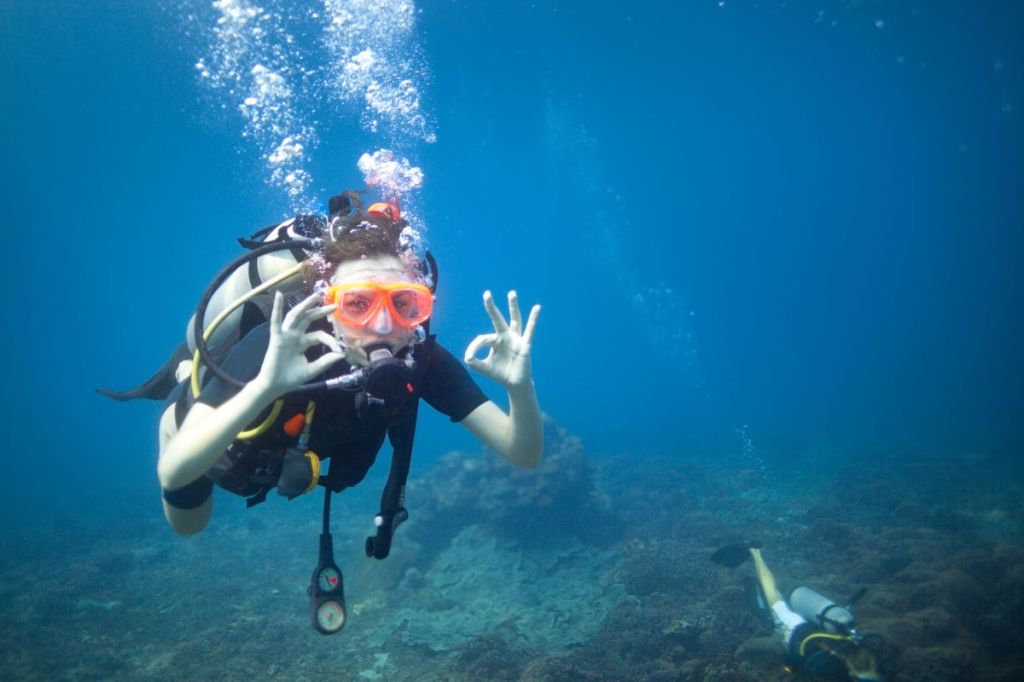
If scuba divers are negatively buoyant on the safety stop, they are too heavily weighted and need to remove weight. If you struggle not to float to the surface at the safety stop, you are positively buoyant, so know to add weight for your next dive. The average dive weight is three pounds; I have bought some smaller one-pound and two-pound weights to make slight adjustments to perfect my buoyancy.
Tip 8 for Better Buoyancy Control – PADI Peak Performance Buoyancy
Become a Confident Female Scuba Diver, and remember, practice makes perfect. Practice your buoyancy throughout your dive and even in a pool. Perfect buoyancy gives a Scuba Woman control, weightlessness, and freedom. Ask your local dive center about completing the PADI Advanced Diver Course, which includes Peak Performance Buoyancy as one of the specialties. It will help you perfect your buoyancy and become a confident Scuba Woman.
How do I know if I’m neutrally buoyant?
If you find you are using your hands to balance in the water or are furiously kicking or waving your arms, you are not neutrally buoyant. Adjust the air in your BCD to achieve neutral buoyancy. As you get deeper, you may need to add air to your BCD to counteract the water pressure, and as you begin to ascend, you will need to release air as the water pressure decreases. Get into the habit of holding your hands to the front and hovering. For a bit of fun, try the Buddha pose (imagine you are sitting cross-legged) and see if you can float comfortably in a meditative position.
Scuba Women are fortunate to experience zero gravity as we navigate our aquatic world. A tranquil, confident Scuba Woman, correctly weighted with good buoyancy and trim, melding with the landscape, will have a very different experience from a scuba diver at odds with their buoyancy.
IT’S NEVER TOO LATE – TAKE THE DIVE WITH ME, TANYA – HELPING WOMEN DIVE CONFIDENTLY
Want to be part of our powerful community? Subscribe to receive the latest posts straight to your inbox and join other women confidently scuba diving.💙💙💙
If you liked this post or any other, please share using the buttons below.
 Empty Nest Diver
Love your blog and what you stand for. Teaching and empowering women to get out there and do it! As well…we are never too old to start. I came across your blog and just wanted to invite you to Komodo National Park. We have a dive center called Maika Diving. I hope that if you come, you can look us up and we can do some diving together. Thank you, and thank you for sharing your experiences with the world! – Tis
LikeLike
Thank you, and I look forward to visiting when I have the opportunity.
LikeLike