

Embracing the world of scuba diving as a woman is an exhilarating journey toward confidence and self-discovery. As we navigate the underwater realm, each dive becomes a testament to our resilience, courage, and the boundless possibilities that lie ahead.
I learned to scuba dive at 55 and was definitely not a confident scuba woman. However, I discovered with each dive, there’s an opportunity to embrace newfound skills, conquer any lingering doubts, and revel in the sheer joy of exploring the ocean’s wonders.
With my 11 best tips below, it’s never too late to become a Confident Scuba Woman and have exhilarating diving adventures in exotic marine environments. Take the dive with me, Tanya.
Table of contents
- Confident Scuba Diver Best Tip #1 FIND A REPUTABLE DIVE CENTER
- Better Scuba Diver Best Tip #2 CONTINUE YOUR SCUBA DIVER TRAINING
- Better Scuba Diver Best Tip #3 THINK DIVE HEALTH & BE SCUBA STRONG
- Better Scuba Diver Best Tip #4 PREPARE FOR YOUR DIVE BEFOREHAND
- Confident Scuba Diver Best Tip#5 COMMUNICATE AT THE DIVE SITES
- Confident Scuba Diver Best Tip #6 COMPLETE BUDDY DIVE CHECKS
- Confident Scuba Diver Best Tip #7 EQUALIZE EARS EARLY AND OFTEN
- Better Scuba Diver Best Tip #8 ORIENTATE & BE AWARE OF YOUR DEPTH
- Better Scuba Diver Best Tip #9 BREATHE AND NOTE AIR CONSUMPTION
- Confident Scuba Diver Best Tip #10 PERFECT PEAK BUOYANCY
- Confident Scuba Diver Best Tip #11 LOG YOUR DIVES IN A LOG BOOK
- Better Scuba Diver Bonus Tip SCUBA DIVING IS FUN ENJOY & MARVEL
Confident Scuba Diver Best Tip #1 FIND A REPUTABLE DIVE CENTER
A good dive center will provide a high standard of training with quality equipment. A reputable dive company will teach scuba divers to be safe as they breathe underwater, dive to considerable depths, and navigate the elements.
I am a PADI-trained Scuba Woman and can attest to the quality of their training. A beginner diver’s first scuba certification is either Open Water Certification with either PADI Open Water Diver or SSI Open Water. The open-water diver course teaches all the basic skills a scuba diver needs. An open-water diver is qualified to dive to 18 meters (60ft), can hire scuba equipment, and dive independently with a buddy.
With the necessary skills, a Scuba Woman can anticipate and manage potential risks, ensuring a safe and enjoyable dive experience. Proper training is the key to diving with confidence and ease, allowing female scuba divers to feel relaxed and at home in the underwater world.

Google, Facebook, and TripAdvisor are great resources when looking for a reputable dive center, and my preferred method – word of mouth. I was fortunate to have Great Keppel Island on my doorstep and learned to dive with the wonderful Keppel Dives in the beautiful waters of the Southern Great Barrier Reef.
Better Scuba Diver Best Tip #2 CONTINUE YOUR SCUBA DIVER TRAINING
Once qualified as an open-water scuba diver, consider another scuba diving certification. PADI has several courses to help you become a more confident diver. I recommend completing PADI Advanced Open Water training, as this focuses more on your buoyancy and navigation.
The advanced certification also includes two specialties, and once qualified, a scuba diver may dive to 30m (98ft). Perfecting buoyancy and navigation skills will create a Confident Scuba Woman. A bonus is that you may complete these courses on a liveaboard or scuba diving trip, getting in some diving travel as you perfect your diving skills.
Fish ID, Night Diving, Digital Underwater Imaging, Search & Recovery, Drift Diving, and Wreck Diving are just some of the specialties available.
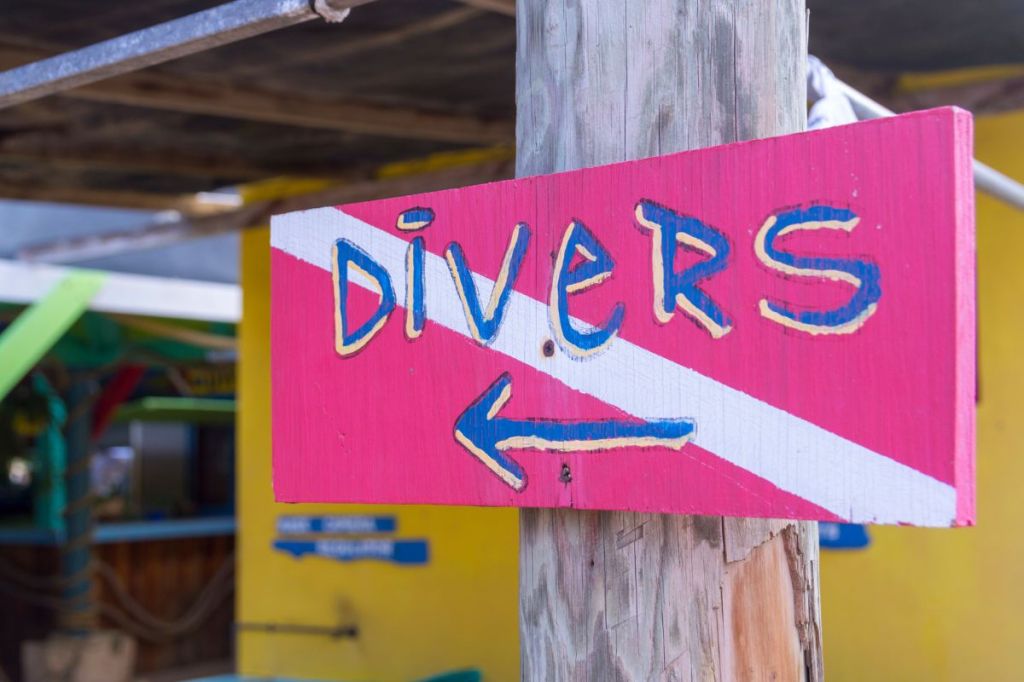
PADI Enriched Air (Nitrox) is also an excellent qualification, especially if diving continuously, as it helps prevent fatigue and allows for longer bottom times. You may further your training to become a Rescue Diver or even a PADI Divemaster.
Once you have your diver certification, follow your training, don’t miss buddy checks, and don’t ignore safety limits. Review your training until it becomes second nature, especially if you don’t dive regularly. I often revise my theory to ensure I don’t fall into bad habits or put myself in danger.
Better Scuba Diver Best Tip #3 THINK DIVE HEALTH & BE SCUBA STRONG
Scuba diving is a physical sport. As a Senior Scuba Diver, I find the equipment is heavy to carry and wear, surface swims can be tiring, getting up the boat ladder, and even getting in and out of a wetsuit strenuous. A good level of fitness will enhance your diving experience.
Scuba diving has literally changed my life. When I learned to dive, I was a 55-year-old Scuba Woman, and I struggled with the physicality of scuba diving. Because I wanted to be a better diver, I began an exercise routine that included cardio and strength and began to eat healthier to fuel my body. Thanks to my desire to be dive-fit and Scuba Strong, I now feel I am getting younger rather than older.
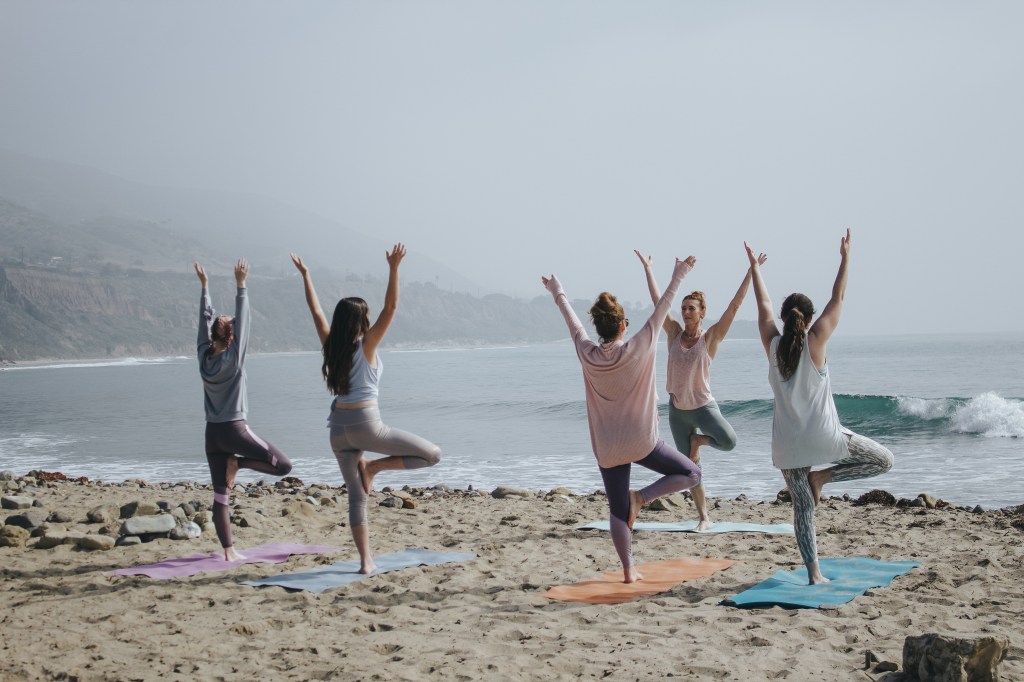
Find a routine that suits you. Yoga is an excellent choice for scuba divers as both involve breath work and strength. Swimming is an obvious choice as you will become comfortable in the water and strengthen your lungs. Being Scuba Strong will help you become a more confident scuba woman.
Better Scuba Diver Best Tip #4 PREPARE FOR YOUR DIVE BEFOREHAND
When I learned to scuba dive, I was not a natural in the water, and while I loved the diving experience, I suffered from nerves and anxiety. I found it helpful to get mentally ready the night before a dive.
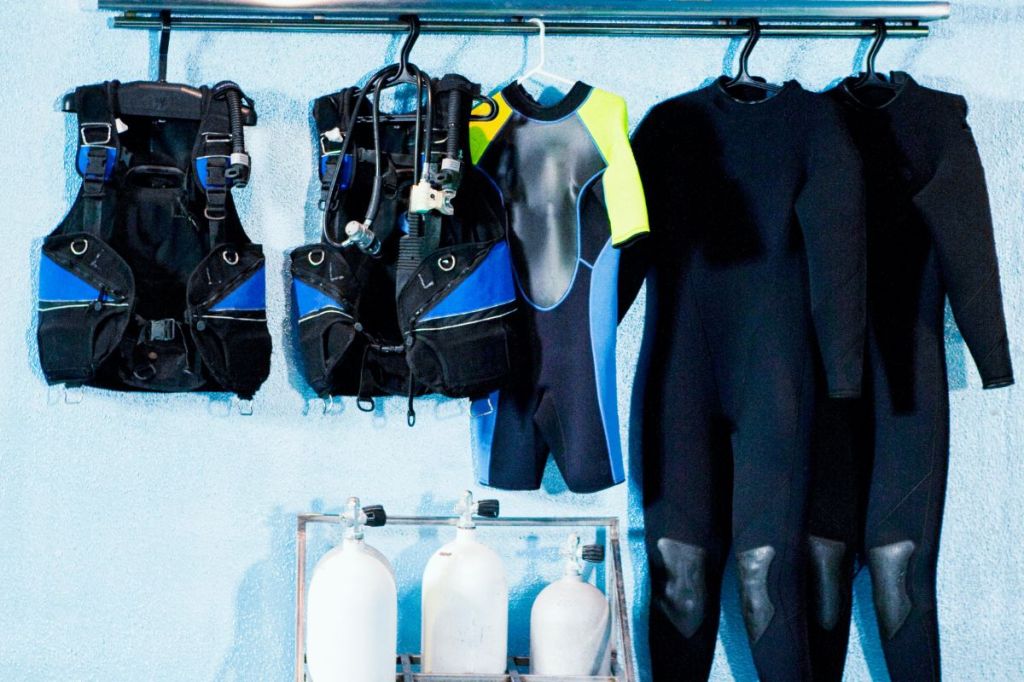
Pack your dive gear the night before, charge your computer and camera, and use a checklist to ensure you have everything. Being organized avoids panic in the morning. Have the appropriate gear; it can be cold during a surface break. Do you have a chill-proof jacket? Do you need gloves and a hood? Sun protection? Also, remember space is limited on a boat, so try and keep it minimal. I have a small dry bag for a beanie, sunglasses, and lollies, and I wear a jacket if needed.
I try to meditate the night before to center myself and focus on my breath. On the way to the dive, I breathe through my mouth to let my body know it is about to adventure underwater. I also do a few swallows and listen for the “pop” in my ears to check that my eustachian tubes are clear and ready for my dive.
I never drink alcohol before a dive and focus on my hydration. I am not a breakfast eater, though I always have a healthy breakfast when diving. We use a lot of energy scuba diving, and our bodies need to be fueled. I always take water with me and sip continuously; it is essential to keep your body hydrated.
Confident Scuba Diver Best Tip#5 COMMUNICATE AT THE DIVE SITES
As an experienced diver, I communicate and will not get into the water unless I feel I have been heard. During my first dive with sharks, I was nervous and wanted to be able to signal, “No, sorry, this is too much for me,” and have my buddy and guide aware that I might panic if I saw a shark. I communicated my fears, made a plan, fell in love with Grey Nurse Sharks, and had a magnificent dive at Wolf Rock.
Listen to the dive briefing, understand it, and ask questions. Know what to do in an emergency or if you lose your dive buddy. (Search for one minute, then slowly make your way to the surface.) If the divemaster/guide knows of your concerns, they can address them and keep an eye on you.

Communicating early and often can relieve nerves and reduce anxiety. It is also wonderful to communicate and share what you see. The ocean is big, and sometimes you need to signal to your buddy so they, too, can see the octopus.
Know your hand signals and communicate confidently with your buddy and guide. It is always good to review hand signals with anyone you are diving with. My sister and I can have whole conversations underwater, which adds to our confidence and the fun of the dive.
Confident Scuba Diver Best Tip #6 COMPLETE BUDDY DIVE CHECKS
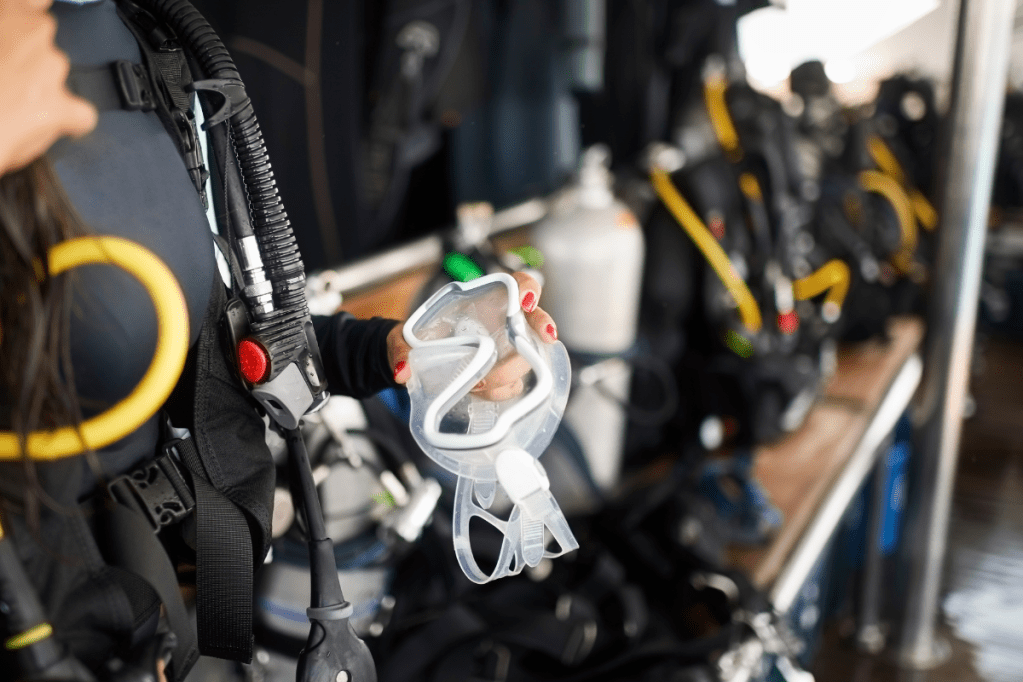
Never get complacent, and always complete proper Buddy Checks. If something goes wrong, it is often a series of minor issues that quickly become big issues. Remember BWRAF (BCD/Buoyancy; Weights; Releases; Air; Final Check) and adhere to it. Know your buddy’s gear so you recognize them underwater and don’t follow the wrong fins! Discuss what to expect from the dive and revise hand signals. Be aware of your buddy and what they may need from you, and make them aware of your needs. Be close enough for an emergency but do not crowd each other.
Confident Scuba Diver Best Tip #7 EQUALIZE EARS EARLY AND OFTEN
Equalizing is adjusting the air pressure in your ears and sinuses as you change depth. It can be particularly challenging between five and ten meters. Get into the habit of equalizing early and often. Start by swallowing on the boat and water’s surface. As you begin your controlled descent, squeeze your nose and exhale gently. A slight pop in your ears means your eustachian tubes are clear. If you experience pain, stop your descent until you can equalize your ears.

I equalize early and often. The more you equalize, the easier it should become as your ears adapt to your diving lifestyle. Take your time and come up a little in the water column if you are having difficulties. For more tips on equalizing, see my post – 11 tips to equalize your ears when scuba diving.
Better Scuba Diver Best Tip #8 ORIENTATE & BE AWARE OF YOUR DEPTH
Watch your computer. Watch your depth. It is very easy to lose control of how deep you are. Get into the habit of continually checking your dive computer. A controlled descent will keep you calm and use less air.
Once you have reached the correct depth for the dive, take a moment to complete a check and become neutrally buoyant. Is your gear comfortable? How is the current? How is your trim? Note some landmarks and check your buddy is okay.
Remember to breathe and pause throughout your dive to have the opportunity to assess yourself, your buddy, and the dive site conditions. Breathe – Do you feel at ease? Remember, the deeper you are, the more air you will use. Always follow your computer and dive within your limits to avoid decompression sickness or injury.
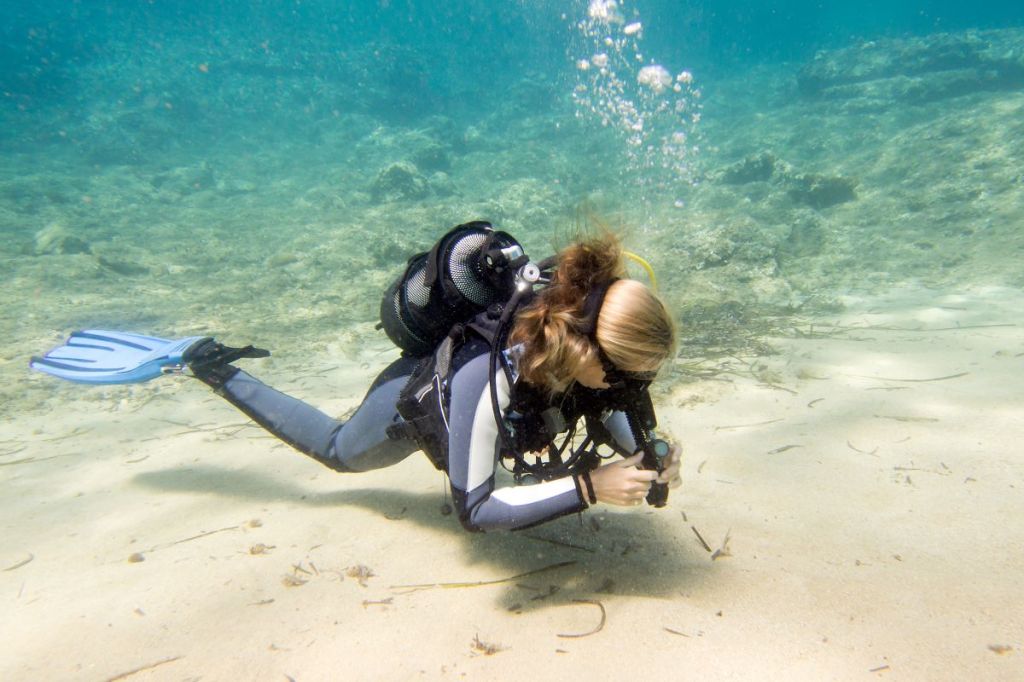
Know the color of your buddy’s dive gear and the guide. Look around, and do not forget to look up and down. Who knows what might be swimming above you?
Better Scuba Diver Best Tip #9 BREATHE AND NOTE AIR CONSUMPTION
Check your air and remember the rule of thirds – 1/3 air to go out on the dive, 1/3 to return, and 1/3 for an emergency. Never come up from a dive with less than 50 bar or 500 psi.
I’ve never found air consumption to be much of a concern for me; quite often, I return from a dive with over 100 bar remaining. It seems that being a Senior Scuba Woman comes with its perks, one of which is that our bodies tend to require less air as we age.
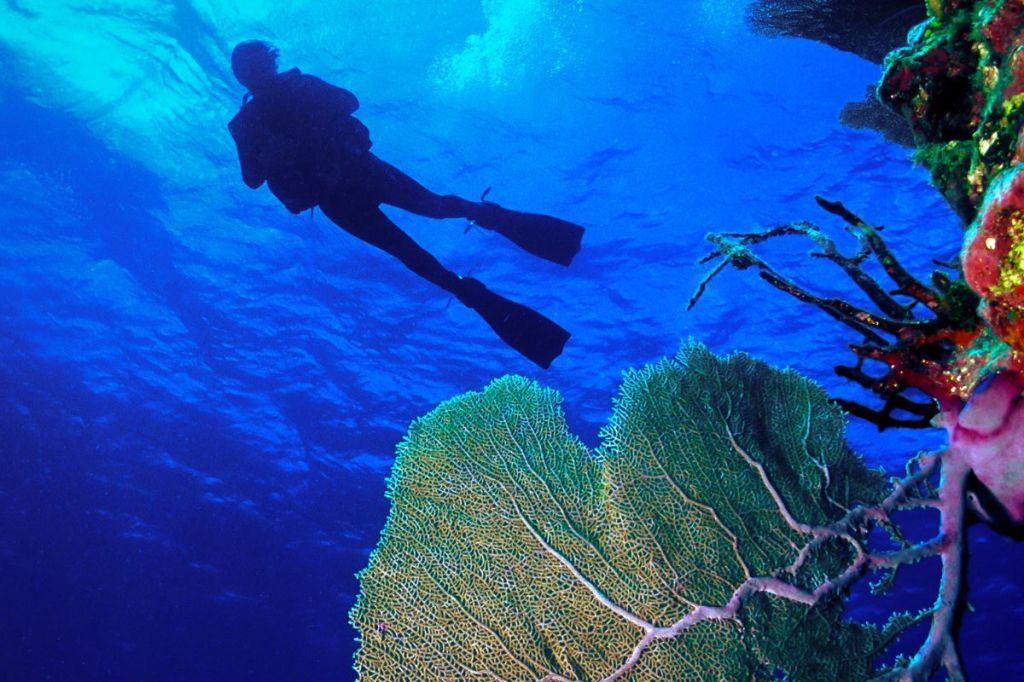
When diving regularly, a Confident Scuba Diver has an idea of their air consumption at different points in a dive. I know how much air I use on a normal descent, 20 minutes into the dive, 40 minutes, and so forth. If I have used more air than usual, I may adjust the dive as needed.
As a beginner diver, you will normally use more air as your body adjusts to being underwater. Remember to never hold your breath and complete long, steady inhales and exhales. Breathing this way actually conserves air.
Confident Scuba Diver Best Tip #10 PERFECT PEAK BUOYANCY
Neutral buoyancy allows a Confident Scuba Woman to feel as if she is free and flying. Perfect buoyancy is not always easy to achieve. Completing the PADI Advanced Open Water course will help as Peak Performance Buoyancy is an included specialty. Always complete a buoyancy check upon entering the water.
As a beginner scuba diver, it is natural to want to move your arms around to help your buoyancy. Resist the urge and clasp your hands to the front (it also helps you look like a cool Scuba Woman). Use your breath to move up and down in the water column. Know where your dump valves are. They will help release any trapped air that may make a diver positively buoyant. Only add air to your BCD in short bursts and allow a moment for your buoyancy to adjust.
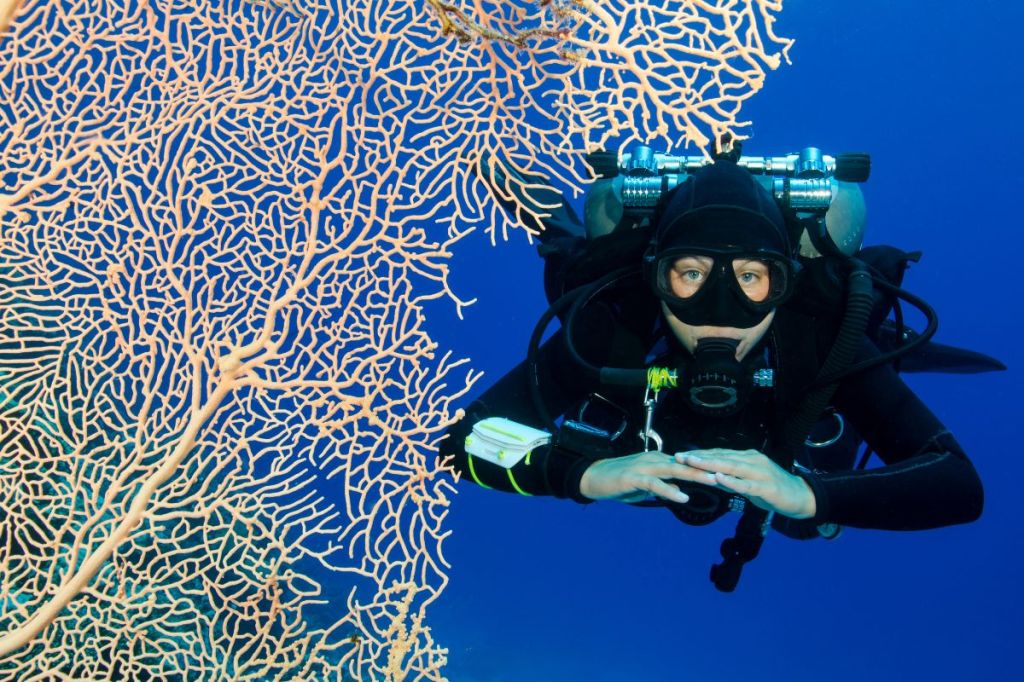
A quiet, confident diver, correctly weighted with good trim, will see far more than a scuba diver moving around vigorously, continually adjusting their buoyancy. Once you have reached your depth, adjust your buoyancy and use inhalations and exhalations to rise and fall. As you begin to ascend at the end of the dive, hold your deflator hose to stay in control of your buoyancy and dump air as needed.
Leave the camera behind until you have mastered buoyancy and enjoy being in the moment.
Confident Scuba Diver Best Tip #11 LOG YOUR DIVES IN A LOG BOOK
A log book is a great way to remember your dives. It also helps to improve your diving when you are a beginner. Make notes about the thickness of your wetsuit, what weight you used, and a technique you were shown. Note how you felt and what worked for you. Don’t forget to record the memories created and your dive time, depth, and air consumption.
Better Scuba Diver Bonus Tip SCUBA DIVING IS FUN ENJOY & MARVEL
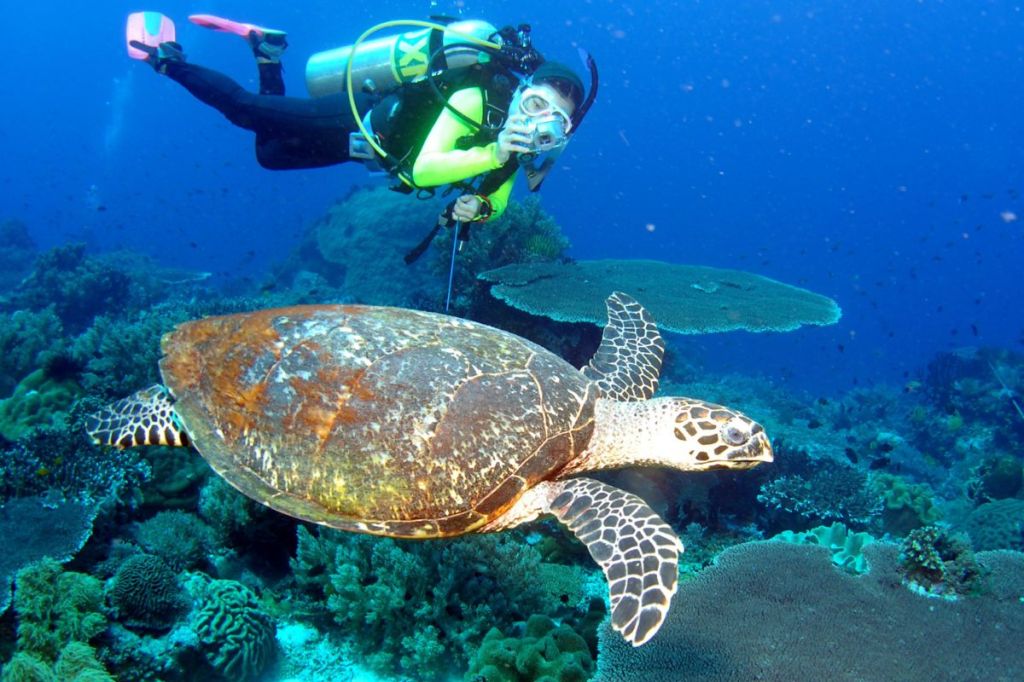
Discover scuba diving, travel to amazing dive sites, and engage with other divers. Being underwater is magical; don’t rush to get anywhere, enjoy the weightlessness, and marvel at the diversity of life below the water’s surface.
IT’S NEVER TOO LATE -TAKE THE DIVE WITH ME – TANYA – HELPING WOMEN DIVE CONFIDENTLY.
Want to be part of our powerful community? Subscribe to receive the latest posts straight to your inbox and join other women scuba diving with confidence 🐢🐢🐢
If you liked this post or any other, please feel free to share using the buttons below.
 Empty Nest Diver
Loved this article on scuba diving for women! It’s inspiring to see tips focused on building confidence and community. Encouraging women to support each other in the diving world is so important. Your advice on taking classes and practicing skills resonates well. Here’s to more women exploring the underwater realm! Visit : http://www.orcadiveclub.in/
LikeLike